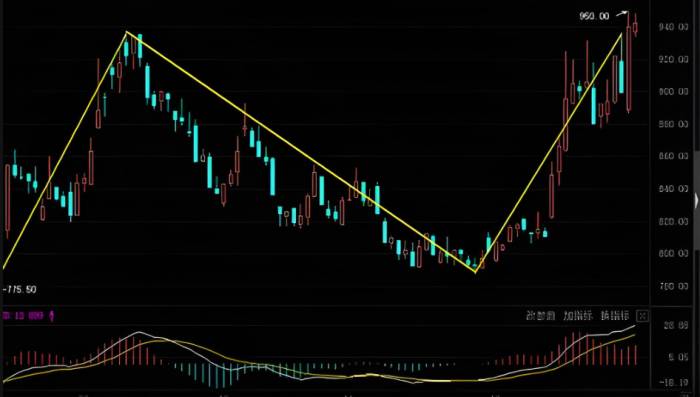
You've seen the charts. Uranium mining companies like Cameco and NexGen Energy have been on a tear, leaving many broad market indices in the dust. Headlines shout about a "nuclear renaissance" and "uranium super-cycle." But if you're an investor looking at this sector for the first time, or even a seasoned one trying to make sense of the volatility, the real question is: why are uranium stocks increasing now, and is this trend built to last? The answer isn't just one thing. It's a perfect storm of structural supply shortages, a dramatic shift in global energy policy, and financial mechanics that have finally tipped the scales. Let's cut through the hype and look at the concrete drivers.
What You'll Learn in This Guide
The Unforgiving Math of Supply and Demand
Forget speculation for a minute. The uranium market is ruled by a simple, brutal equation. Global nuclear reactors need about 180-190 million pounds of uranium oxide (U3O8) annually to keep the lights on. For over a decade after the 2011 Fukushima disaster, the price was too low to justify new major mining projects. Production slumped. Mines closed. Exploration budgets dried up.
Today, primary mine supply sits around 140 million pounds. That's a chronic, structural deficit of 40-50 million pounds every single year. How has the market stayed afloat? By eating through secondary inventories—stockpiles held by utilities, governments, and from dismantled nuclear weapons. According to reports from firms like UxC and the World Nuclear Association, these stockpiles are now largely depleted. The cushion is gone.
Then you have supply shocks. Kazakhstan, the world's largest producer, has faced production challenges and logistical issues. A major Canadian mine, Cigar Lake, has had its operational lifespan extended but will eventually wind down. Bringing a new uranium mine from discovery to production is a 10-15 year, multi-billion dollar endeavor. Even if the price signal screams "build," supply cannot respond quickly. This inertia is a core reason for the bullish long-term outlook.
The Global Policy U-Turn on Nuclear Power
This is where the story gets interesting. Demand was supposed to be flat or declining. Fukushima seemed to spell the end. But climate change and energy security have rewritten the script.
Look at the policy reversals. Japan is restarting reactors, with over a dozen already online and more in the queue. South Korea did a complete 180-degree turn, embracing nuclear as a key baseload power source. In Europe, the energy crisis triggered by the war in Ukraine was a wake-up call. Countries like Sweden, the UK, Poland, and France are now aggressively planning new reactors or extending the lives of existing ones. France, in particular, announced plans to build at least six new EPR2 reactors.
The biggest shift is in perception. Nuclear power is now officially classified as a sustainable green energy source in the EU's taxonomy and is gaining similar recognition elsewhere. This unlocks green financing and makes nuclear politically palatable again. It's no longer just about keeping old plants running; it's about building new ones. China and India never slowed down, with massive construction programs that will require immense amounts of uranium for decades.
The U.S. Angle: Strategic Stockpiling and Domestic Revival
In the U.S., the Department of Energy's request for proposals to establish a national strategic uranium reserve is a huge deal. It's a direct government intervention to support domestic production and break reliance on foreign sources (namely Russia and its allies for conversion services). This creates a guaranteed, policy-driven buyer for American uranium miners. Combined with bills like the Inflation Reduction Act, which includes tax credits for existing nuclear plants, the U.S. is creating a floor under domestic demand and supply.
Sprott's Physical Trust: The Financial Catalyst
Here's a factor most mainstream explanations gloss over, but it's been critical to the price move. In 2021, the Sprott Physical Uranium Trust (SPUT) was launched. It's a closed-end fund that buys and holds physical uranium. This created a brand-new, massive financial buyer in a tiny physical market.
Think of it this way: the uranium spot market is small, maybe $1-2 billion in annual trade. SPUT raises money from investors (like an ETF) and uses it to buy physical pounds, taking them off the market permanently. This directly tightens physical supply. It's a self-reinforcing loop: rising prices attract investors to SPUT, SPUST buys more uranium, which pushes prices higher. It transformed uranium from just a commodity into a financializable asset. While some purists grumble this distorts the "true" market, it's an undeniable reality of the modern landscape. Ignoring SPUT's impact is a mistake.
How to Invest in Uranium Stocks and ETFs
So you're convinced the thesis has merit. How do you get exposure? It's not just picking a ticker. The sector has layers.
The Majors (Producers): These are companies with active, producing mines. They generate cash flow directly tied to the uranium price, especially on uncontracted pounds. Their stock is a relatively direct bet on rising prices, but they also carry mining operational risks (cost overruns, grade issues). Cameco (CCJ) is the blue-chip, the largest publicly traded pure-play. Kazatomprom is the Kazakh giant, though its production is sometimes seen as less responsive to market prices due to state influence.
The Developers: These companies own advanced projects but aren't producing yet. They offer more leverage—if their project gets financed and built into a rising price environment, the upside can be enormous. The risk is also higher: permitting delays, financing difficulties, and the sheer time it takes. NexGen Energy (NXE) with its tier-one Rook I project in Canada, and Denison Mines (DNN) with its in-situ recovery project in the Athabasca Basin, are key names here.
The Explorers & Juniors: The highest-risk, highest-potential-reward segment. These companies are drilling, looking for the next big deposit. Most will fail. A few might become 10-baggers. This is for speculative capital only.
The ETFs and Trusts: For diversified exposure without stock-picking.
- Global X Uranium ETF (URA): Holds a basket of miners and producers globally. Your one-stop shop.
- Sprott Uranium Miners ETF (URNM): More concentrated, with heavier weights in the pure-play names and includes a chunk of the physical trust (SPUT).
- Sprott Physical Uranium Trust (U.UN on TSX, SRUUF on OTC): Direct exposure to the physical metal price, minus storage and management fees.
Key Risks and What the Experts Miss
It's not all sunshine. I learned this the hard way during previous uranium cycles. The volatility is stomach-churning. A negative political announcement or a reactor outage can send stocks down 20% in a week.
One subtle risk everyone underestimates: execution risk in the developers. The market is pricing many of these companies as if their projects will be built on time and on budget. Having followed mining for years, I can tell you that almost never happens. A major capital cost blowout at a key project could sour sentiment for the whole sector, even if the long-term thesis is intact.
Another is liquidity. Outside of the top few names, trading volumes can be thin. Getting in and out of larger positions in smaller miners can be tricky and move the price against you.
Finally, the "nuclear renaissance" is still a story in many countries. Public opposition, though lessening, hasn't vanished. New reactor projects in the West are notorious for delays and cost overruns (see Vogtle in the U.S., Flamanville in France). If the rollout of new nuclear is slower than expected, it could delay the demand surge.
Your Uranium Investment Questions Answered
The surge in uranium stocks isn't a mystery or a bubble. It's a logical, if delayed, response to a fundamental market imbalance that's been building for a decade, supercharged by a historic shift in global energy policy. The ride will be bumpy, the headlines will swing from euphoric to doom-laden. But the underlying physics of the supply deficit and the newly urgent politics of energy security suggest this trend has a core of solidity that earlier rallies lacked. Do your homework, understand the risks, and size your position accordingly. This isn't a passing fad; it's the market finally pricing in a new reality for nuclear power.

Share Your Experience