10. Mystery Spot – Santa Cruz, California, USA
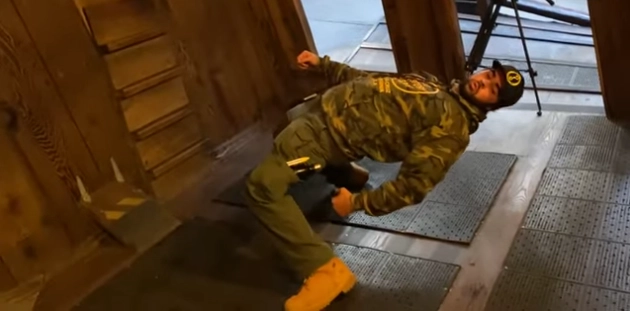
Nestled in the redwood forests of Santa Cruz, California, the Mystery Spot has baffled visitors since it opened to the public in 1940. It’s a small circular area—only about 150 feet in diameter—where the laws of gravity and physics appear to be turned on their head. Tour guides demonstrate astonishing feats: balls roll uphill, people lean impossibly without falling, and objects defy logic by staying suspended at odd angles.
Visitors entering the tilted cabin at the heart of the Mystery Spot often feel disoriented, dizzy, or slightly nauseated—effects attributed by some to strong gravitational or magnetic anomalies. However, scientists suggest a more grounded explanation: a combination of tilted surfaces, distorted visual references, and clever architectural tricks creates powerful optical illusions. The cabin itself is deliberately built at a slant, and the surrounding trees and landscape offer no visual cues to correct one’s internal balance. This leads your brain to interpret vertical as horizontal and vice versa.
Despite the rational explanations, the place retains an eerie appeal. Over the decades, it’s been the subject of wild speculation involving alien landings, gravitational vortexes, and magnetic fields. The mystery is so ingrained in local culture that a “Mystery Spot” bumper sticker is a common sight across California.
What makes the Mystery Spot so compelling isn’t just the disorienting experiences—it’s the sense of wonder it inspires. It reminds visitors that perception isn’t always reality, and that our senses can be tricked with surprising ease. Whether you’re a skeptic or a believer in the supernatural, the Mystery Spot offers a memorable and mind-bending encounter with the seemingly impossible.
While science ultimately debunks the idea of actual gravitational disruption at the Mystery Spot, the illusion is so convincing that it continues to draw thousands of curious travelers each year. It remains a must-see for anyone intrigued by the strange interplay between human perception and natural physics.
9. Magnetic Hill – Ladakh, India
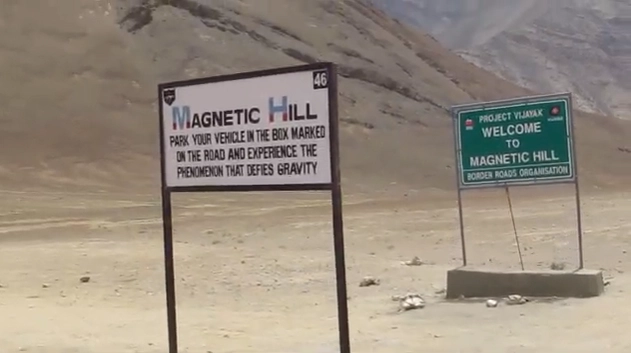
On a remote stretch of the Leh-Kargil-Baltic National Highway in Ladakh, India, lies a phenomenon so strange it has become a local legend: Magnetic Hill. Here, drivers put their vehicles in neutral at a designated spot on the road—and watch in amazement as the cars slowly roll uphill, seemingly defying gravity.
Magnetic Hill has fascinated both tourists and scientists. The road signs call it a “gravity hill,” and local folklore claims the area is blessed with supernatural powers or is home to mysterious magnetic forces that pull vehicles upward. Even pilots flying over the region have reported navigational anomalies, further fueling the legend.
But what’s really happening here? According to physicists and geologists, Magnetic Hill is not the result of any unusual gravitational or magnetic activity. Rather, it’s an optical illusion created by the layout of the surrounding terrain. The mountains and hills around the area are sloped in such a way that the downward incline appears to be an upward one. Your eyes are tricked into thinking you’re rolling uphill when you’re actually going downhill at a very slight gradient.
What enhances the illusion is the lack of a proper horizon line, which confuses your sense of vertical alignment. Without a stable frame of reference, the brain relies on misleading visual cues from the terrain, giving the impression that gravity is being defied.
Despite the scientific explanation, the experience is truly uncanny. Tourists often stop their cars and test the phenomenon themselves, usually reacting with disbelief. The hill has become a popular attraction in Ladakh, and even local authorities have embraced the myth by marking the spot with road signs and tourist information.
Magnetic Hill in Ladakh offers a unique blend of natural illusion and cultural mystique. It’s a place where science and legend meet, and where travelers leave with a renewed sense of curiosity about the forces—both real and imagined—that shape our world.
8. Spook Hill – Lake Wales, Florida, USA
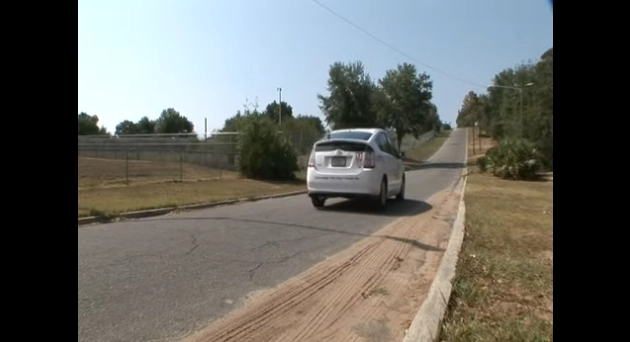
In the quiet town of Lake Wales, Florida, drivers often find themselves scratching their heads at a bizarre roadside phenomenon known as Spook Hill. Like other gravity hills around the world, it gives the illusion that vehicles in neutral gear roll uphill against gravity. What sets Spook Hill apart, however, is the eerie folklore surrounding its origins.
According to local legend, the hill was once the site of a great battle between a Native American chief and a giant alligator. The chief was said to have defeated the beast, but their spirits continue to clash, creating a supernatural force that pulls vehicles up the hill. Another tale says the hill is haunted by ghosts from a nearby pioneer cemetery. These stories have persisted for generations, giving Spook Hill its spine-tingling name.
In practice, the illusion is caused by a deceptive landscape. The road has a slight downhill slope, but the surrounding terrain slopes more steeply in the opposite direction, tricking the eyes and brain. This illusion of an incline makes it appear as though your car is being pulled uphill when it’s actually rolling downhill.
There’s even a sign at the base of the hill that invites visitors to test the legend for themselves. It reads: “Park your car on the white line, place it in neutral, and feel the force pull you up the hill!”
Thousands of tourists visit Spook Hill every year, and many walk away convinced something supernatural is at work. The area is a popular field trip destination for schools, and it has been featured in books, documentaries, and travel shows. The City of Lake Wales has even embraced the phenomenon by incorporating it into local tourism branding.
Whether you’re drawn by the scientific curiosity or the ghost stories, Spook Hill offers a uniquely Floridian twist on the mystery of gravity hills. It’s a prime example of how our senses can be easily fooled and how folklore can become intertwined with natural optical illusions. For many, the experience is not just puzzling—it’s a memorable moment of childhood wonder that lingers for years.
7. Oregon Vortex – Gold Hill, Oregon, USA

The Oregon Vortex is one of the most famous and enduring “gravity-defying” locations in the United States. Located near Gold Hill, Oregon, this strange site has been fascinating visitors since it opened to the public in the 1930s. Here, people appear to change height depending on where they stand, brooms stand upright on their own, and balls roll uphill.
At the center of the phenomenon is a crooked wooden shack known as the “House of Mystery.” Inside this slanted building, visitors experience dizziness, objects behave oddly, and the laws of physics seem broken. People lean forward without falling, and walking in certain directions becomes unnaturally difficult. Guides perform demonstrations that appear to show people growing or shrinking right before your eyes as they switch positions.
Those who believe in the supernatural claim the area is a “vortex”—a spot where Earth’s magnetic fields are unusually strong, creating a swirling force that alters gravity. Some Native legends also hint at the area being spiritually significant, describing it as a place where animals avoid and tools behave strangely.
However, much like other gravity hill sites, the Oregon Vortex is best explained by optical illusion. The slanted construction of the shack and the steep surrounding topography skew your visual references. Without a true vertical or horizontal baseline, your brain is tricked into misjudging angles, slopes, and distances. Even though your senses are being fooled, the effect is so powerful that it can feel like real physical forces are at play.
Scientists who have studied the site confirm that the strange effects are largely visual and psychological, not magnetic or gravitational. Still, no amount of rational explanation can fully dispel the sense of mystery. Many visitors report feeling inexplicably nauseous, light-headed, or “off balance,” reinforcing the idea that something isn’t quite right.
The Oregon Vortex remains a major tourist attraction and a favorite of those who enjoy weird science, paranormal speculation, or just a good head-scratching illusion. Whether you walk away believing in gravitational anomalies or simply impressed by clever architecture, the experience leaves a lasting impression.
6. Electric Brae – Ayrshire, Scotland
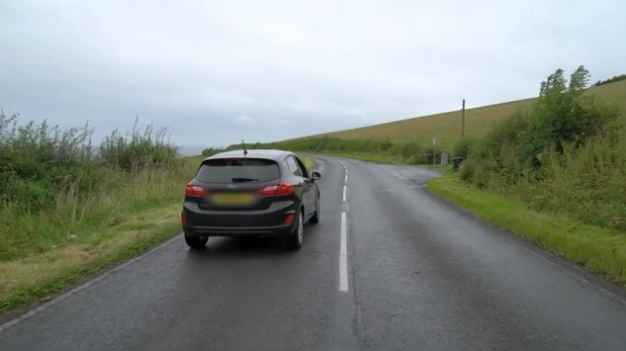
On the A719 coastal road in South Ayrshire, Scotland, lies a stretch of highway known as Electric Brae, a place where cars seem to roll uphill against gravity. The name “brae” means hill in Scots, and “electric” was added in the early 20th century when people believed mysterious electromagnetic forces were behind the baffling effect.
Travelers are invited to stop at a marked lay-by and put their car in neutral. As they sit and watch, the vehicle begins to move slowly—seemingly uphill—causing drivers and passengers alike to question everything they know about gravity. Cyclists have been seen coasting uphill without pedaling, and water poured onto the road appears to flow upward.
Despite the thrilling appearance, Electric Brae is yet another masterclass in optical illusion. The surrounding landscape—rolling hills, the distant sea horizon, and a curved road—distorts perception in such a way that a downhill slope appears to go uphill. Surveying tools and GPS measurements confirm that the road slopes gently downward in the direction of the apparent “climb.”
The phenomenon is purely visual, but it’s a compelling one. The Scottish countryside provides no stable reference points, and the tilt of the road relative to the background tricks the brain into interpreting the slope incorrectly. This illusion is so effective that even when you know the scientific explanation, your eyes still struggle to believe it.
Electric Brae has been mystifying locals and tourists for over a century. Even royalty has paid it a visit—King Edward VIII (later the Duke of Windsor) was reportedly fascinated by it during a visit in the 1930s. The site remains popular today, with signs explaining the illusion and parking areas to allow curious motorists to experience it firsthand.
Though Electric Brae doesn’t truly defy gravity, it masterfully demonstrates the limits of human perception and the quirks of visual interpretation. It’s a gentle reminder that even in the quiet hills of Scotland, reality isn’t always what it seems.
5. Reverse Waterfall – Naneghat, Maharashtra, India
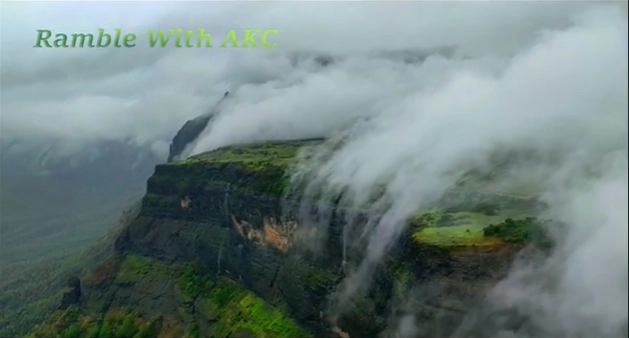
High in the Western Ghats of Maharashtra, near the ancient trade route of Naneghat, lies one of the most mystifying natural sights in India: the Reverse Waterfall. During the monsoon season, visitors watch in disbelief as a waterfall appears to flow upward—water rushing skyward instead of cascading down.
This surreal phenomenon occurs when extremely strong winds whip through the narrow mountain passes of the Naneghat region. As water pours over the edge of the cliff, the fierce upward wind velocity catches it mid-air and blows it back, sending it upward in a misty arc. From a distance, it appears as though the laws of physics have been reversed and gravity has lost its grip entirely.
The effect is most visible during peak monsoon months (June to September), when rainfall is heaviest and wind speeds are highest. Tourists trek up the mist-covered trails and gather at the edge of the gorge to witness the phenomenon—phones and cameras at the ready to capture what looks like a supernatural event.
Unlike gravity hills, which rely on visual trickery, the Reverse Waterfall at Naneghat is the result of real natural forces. It’s not an illusion, but a demonstration of how powerful environmental conditions—specifically air pressure and wind speed—can override gravity’s influence in localized situations. It is also a vivid illustration of fluid dynamics in action, as the lighter water droplets and mist are lifted easily by upward wind currents.
The Naneghat region itself is steeped in history and natural beauty. It was once a bustling trade route used by ancient kingdoms, and the area features caves with ancient inscriptions dating back to the 1st century BCE. The combination of geological intrigue, historical significance, and visual spectacle makes it a prime destination for adventure seekers and curious travelers.
For those lucky enough to witness the Reverse Waterfall in person, the experience is unforgettable. It challenges your expectations of the natural world and reminds you of nature’s capacity to surprise—even in the age of science.
4. Mount Aragats Gravity Hill – Armenia
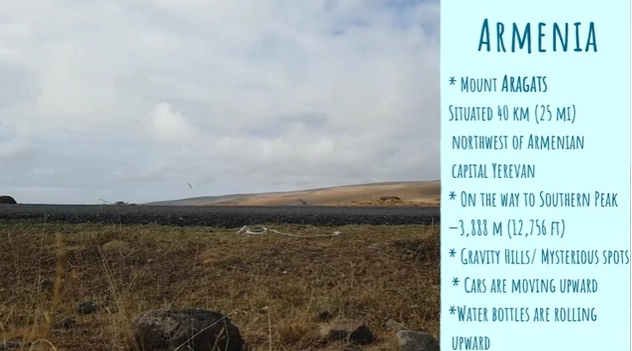
In the Caucasus region of Armenia, on the slopes of the majestic Mount Aragats, lies a road where gravity seems to act in reverse. Here, cars left in neutral gear appear to roll uphill, and water poured onto the surface flows against the slope. This “gravity hill” near Lake Kari has become a growing curiosity for both tourists and physicists.
The area has no signs, no theme park design, and no built-in optical tricks—just a seemingly ordinary stretch of mountain road. Yet the moment drivers stop and test it for themselves, they witness their vehicles moving uphill without any engine power. Some even try walking or pouring liquid to confirm what they’re seeing—and every time, the motion contradicts expectations.
So what causes this bizarre effect? Much like other gravity hills, the explanation lies in perception. The Mount Aragats road is part of a terrain where the surrounding landscape gives off a powerful illusion. Distant mountains, uneven roadside vegetation, and a deceptive horizon all combine to trick the brain into misjudging the true slope. What seems to be an upward incline is actually a gentle downward one.
Still, some speculate that this place is more than just an illusion. Mount Aragats is a dormant volcano and has long been associated with unusual energy fields and electromagnetic anomalies. Though no conclusive scientific evidence supports the idea of altered gravity or magnetism here, the stories persist. Locals sometimes refer to the location as a “magnetic zone” and share tales of compass needles acting erratically.
Beyond the mystery, the natural setting is breathtaking. Mount Aragats is Armenia’s highest peak, and the road in question offers sweeping views of rugged mountains, alpine lakes, and ancient monasteries. It’s no wonder that the gravity hill has become a favorite stop for those exploring the area.
Whether you’re chasing strange science or just a unique photo opportunity, the Mount Aragats gravity hill offers an unexpected twist in an already stunning landscape. It’s a place that reminds us how deeply perception shapes our reality—and how easy it is to be fooled by what we think we see.
3. Hoia Forest Gravity Road – Cluj-Napoca, Romania

Deep within the Hoia Forest near Cluj-Napoca, Romania—often called the “Bermuda Triangle of Transylvania”—lies a lesser-known mystery: a narrow road where gravity appears to misbehave. Here, cars in neutral gear roll up a hill, and cyclists find themselves coasting the “wrong” way uphill. In a forest already famous for eerie legends, ghost sightings, and UFO stories, the gravity-defying road adds yet another layer of intrigue.
The phenomenon, while not as heavily marketed as other gravity hills, is well-known among locals and paranormal enthusiasts. Tourists who hear of the road through word of mouth or local guides often attempt their own experiments—placing water bottles on the ground or allowing strollers and bikes to move unaided. The results are consistently strange: the objects move upward, defying what one would expect from gravity.
As with other gravity hill phenomena, the leading explanation is optical illusion. The road is situated in such a way that the surrounding trees lean at odd angles, the terrain lacks a visible horizon, and the curves of the road distort depth perception. What appears to be uphill is actually downhill, but the absence of reliable visual cues leads the brain to interpret the slope incorrectly.
Still, the road’s location within Hoia Forest adds a distinctly supernatural aura. The forest itself has a dark reputation—said to be haunted by spirits, the site of mysterious disappearances, and a hotspot for alleged alien encounters. Strange photos taken in the forest often show floating orbs, silhouettes, or unexplained light sources. It’s even been the subject of several paranormal documentaries and studies.
Because of this, the gravity hill is often treated not just as a physical oddity, but as a spiritual or energetic anomaly. Some claim that the area is an energy vortex or interdimensional portal, though such claims remain firmly in the realm of speculation.
Whether you’re a skeptic testing visual illusions or a believer seeking proof of the supernatural, the gravity road in Hoia Forest delivers a surreal and thrilling experience. It’s not just gravity that’s called into question here—it’s reality itself.
2. Mount Kelimutu Floating Stones – Flores, Indonesia
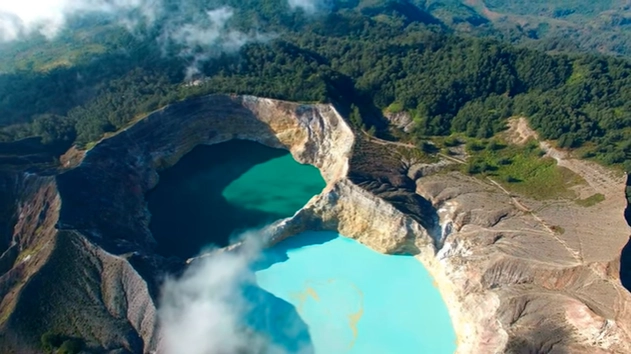
Mount Kelimutu in Flores, Indonesia, is best known for its trio of striking crater lakes that change colors unpredictably—from turquoise to black to blood red. But beyond this bizarre natural palette lies a lesser-known mystery that defies gravity: the phenomenon of “floating stones.”
Locals and travelers alike report finding lightweight volcanic stones near the mountain’s trails that seem to defy gravity in subtle ways. When thrown or dropped, some of these porous rocks—often volcanic pumice—descend unusually slowly, almost as if suspended. Others seem to hover momentarily before falling. The local term “batu terbang” (flying stone) refers to the optical illusion that these rocks are floating or resisting gravity.
So, what’s really happening?
The stones in question are pumice, formed during explosive volcanic eruptions. Pumice is filled with tiny gas bubbles, making it one of the lightest rocks on Earth. In some cases, the air pressure, wind currents on the slopes, and the specific shape of the stone combine to create a levitating or “floating” visual effect when it’s tossed into the air or released. Additionally, when pumice lands on water, it can float for a long time due to its buoyant properties—another gravity-defying sight that puzzles the uninitiated.
Local myths around Kelimutu only add to the mystery. The mountain is considered sacred by the indigenous Lio people, who believe the lakes are resting places for departed souls. The “floating stones,” in this context, are said to be messages from the spirit world—signs that the mountain is alive and watching.
Mount Kelimutu offers a fascinating blend of geophysics, volcanology, and folklore. Though science explains much of what happens here, the surreal landscape and peculiar rock behavior leave visitors feeling like they’ve stepped into another world—where even the pull of gravity seems negotiable.
1. Tulsishyam Gravity Hill – Gujarat, India
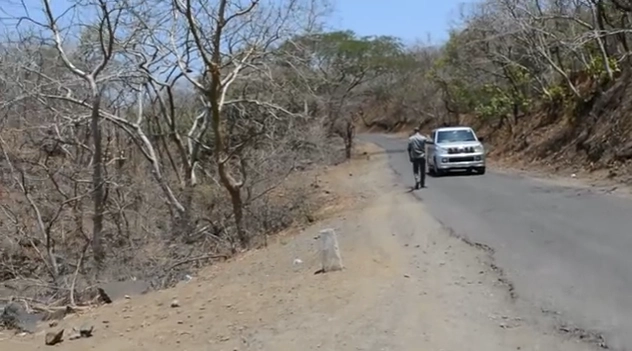
In Gujarat’s Gir National Park, India, the village of Tulsishyam harbors a bizarre phenomenon that has drawn intrigued visitors for decades: a gravity hill where vehicles appear to roll uphill on their own. As in other similar locations, the slope of the road plays tricks on the eyes, making a downhill incline seem like an upward one.
The spot is clearly marked. Drivers stop at a designated location, place their cars in neutral, and watch as the vehicle slowly begins to “climb” the slope—without any engine power. People pour water on the road and observe it flowing backward. It feels like some invisible force is pulling everything uphill, defying the laws of physics.
Yet the explanation, as in most such places, lies in visual misperception. The surrounding terrain creates a powerful optical illusion. Trees may lean in unusual directions, and the hills rise and fall in a way that tricks the brain’s internal gyroscope. Without a proper view of the horizon, the brain uses misleading visual cues, resulting in the illusion that you’re going uphill when you’re actually going down a gentle slope.
What makes Tulsishyam even more interesting is its spiritual dimension. The village is home to an ancient temple dedicated to Lord Vishnu in his Tulsishyam form. Locals and pilgrims believe the area is blessed and attribute the gravity-defying experience to divine power. Some even suggest that the temple’s sacred energy influences natural laws, including gravity.
The Tulsishyam Gravity Hill has become a tourist attraction, especially during religious festivals. Families come in cars and buses to test the strange spot for themselves, and videos of the phenomenon are widely shared online. Local businesses have embraced the mystery, selling refreshments and souvenirs to the curious. While scientists are quick to point out that gravity is still very much in effect, the power of illusion—and belief—is undeniable here.


Share Your Experience