What You'll Find Inside
Let's cut to the chase. If you're looking for the single most volatile stock market on the planet, based on recent historical data and consistent economic turmoil, Argentina's Merval index often takes the crown. It's not even a close race some years. I've watched it swing 10% in a day based on a political tweet. But naming just one country misses the bigger, more useful picture. The real story is about a cluster of frontier and emerging markets where volatility isn't an exception—it's the daily weather.
Understanding which markets are the most volatile isn't just trivia. It's crucial for managing risk, spotting speculative opportunities (if you have the stomach for it), and building a resilient portfolio. This isn't about fear-mongering. It's about clarity. So, we'll look at the data, explore the reasons behind the chaos, and discuss what a rational investor can actually do with this information.
What Stock Market Volatility Really Means
People throw around "volatility" like it just means "prices go down." That's wrong. Volatility measures the magnitude and frequency of price changes, regardless of direction. A market that jumps 5% up one day and 5% down the next is more volatile than one that grinds slowly upward 0.1% daily.
High volatility creates two feelings: anxiety and greed. The anxiety is obvious—your investment can lose value rapidly. The greed is subtler. Those huge upswings make people think they can time the market and grab quick profits. Spoiler: most can't. For local investors in these countries, this volatility often reflects a desperate search for a store of value when their local currency is collapsing. They're not investing; they're fleeing.
How We Measure Market Swings
To compare apples to apples, analysts use standard metrics. The most common is the standard deviation of returns. A higher standard deviation means wider price swings. Another is Beta, which measures a market's volatility relative to a global benchmark (like the MSCI World Index). A Beta above 1 means it's more volatile than the global market.
We also look at maximum drawdowns—the worst peak-to-trough decline—and the frequency of extreme daily moves (say, days where the index moves more than 3%).
Data from index providers like MSCI and academic studies consistently point to the same regions. Let's get specific.
The Top Contender for Most Volatile Market
Based on a combination of long-term standard deviation, political risk, and currency instability, Argentina is frequently in the lead.
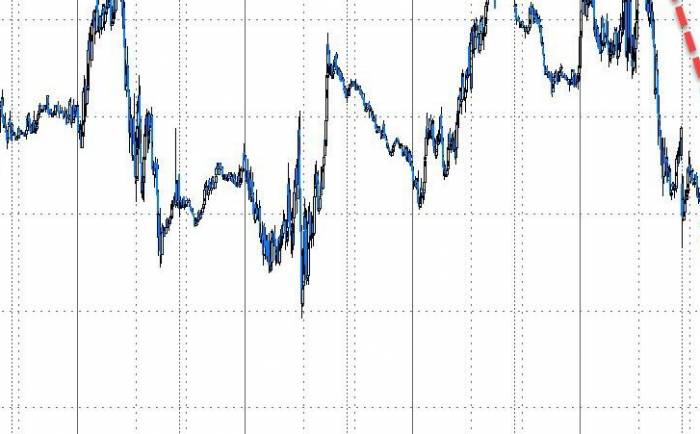
Think about it. In the past decade, Argentina has defaulted on its sovereign debt (again), seen annual inflation soar past 200%, and cycled through economic ministers like tissues. The Merval index, priced in Argentine pesos, looks like a seismograph during an earthquake. But here's a critical nuance most articles miss: when you convert the Merval's returns to US dollars (which is how a foreign investor experiences it), the volatility is often dampened because the peso's collapse and the stock market's rise sometimes offset. The real volatility for a local is apocalyptic; for a foreigner, it's just wildly high.
Other perennial members of the high-volatility club include:
- Turkey: The BIST 100 is at the mercy of unorthodox monetary policy and geopolitical tensions. President Erdogan's insistence on lowering interest rates against inflationary pressures has led to brutal sell-offs and rallies based on policy U-turns.
- Nigeria: The NGX All Share Index faces volatility driven by oil price shocks, foreign exchange scarcity, and political uncertainty. Liquidity can dry up fast.
- Venezuela: While its stock market is now largely irrelevant internationally due to hyperinflation and sanctions, its historical volatility was off the charts. It serves as a lesson in economic mismanagement.
- Egypt: Heavy state involvement in the economy and recurring foreign currency crises make the EGX 30 a rollercoaster.
A Quick Comparison: While Argentina often leads, the ranking can shift year-to-year based on who's having the latest crisis. The common thread isn't the country name; it's the underlying economic and political fragility.
Why Are Some Markets So Unstable?
It's never just one thing. It's a toxic cocktail of factors. If you see several of these in a country, expect a bumpy ride.
1. Political and Policy Instability
This is the biggest driver. Frequent changes in government, populist policies that scare off investors, expropriation risks, and corruption. Markets hate uncertainty more than they hate bad news. A predictable, stable bad policy is better than chaotic, changing policies. In many frontier markets, the rules of the game change overnight.
2. Hyperinflation and Currency Depreciation
When the local currency is losing value by the hour, people flock to stocks as a tangible asset hedge. This creates artificial, inflation-driven rallies that have nothing to do with company fundamentals. Then, when the government intervenes or the currency finds a temporary floor, the air comes out just as fast. The stock market becomes a proxy for the currency black market.
3. Economic Concentration and Commodity Dependence
Many volatile markets rely on one or two commodities (oil in Nigeria, copper in Zambia, soy in Argentina). A global price swing in that commodity sends the entire stock market and national budget into a tailspin. There's no diversified economic base to cushion the blow.
4. Low Liquidity and Foreign Participation
Thin trading volumes mean a few large orders can move the entire index. When foreign investors, who often provide stability and long-term capital, get spooked and pull out, the local market doesn't have the depth to absorb the selling without huge price gaps.
5. Weak Institutions and Rule of Law
If shareholders' rights are weak, corporate governance is poor, and contract enforcement is unreliable, investors demand a higher risk premium. This translates to sharper reactions to any negative news.
I remember talking to a fund manager in Istanbul. He said, "We don't analyze P/E ratios here first. We analyze the central bank governor's latest speech and the president's Twitter feed. The fundamentals come second." That tells you everything.
What This Volatility Means for Investors
So, the market is volatile. What now?
For the speculative trader: These markets offer the potential for huge short-term gains. The spreads are wide, the trends can be powerful. But it's akin to gambling. Transaction costs are high, and you're competing against local insiders who understand the political nuances far better than you ever will.
For the long-term, fundamentals-driven investor: High volatility creates mispricing. Solid companies can get thrown out with the bathwater during a political panic. If you have a multi-year horizon and can tolerate the gut-wrenching drawdowns, you might buy great assets at fire-sale prices. The key word is "might." You also might watch that company get nationalized.
The biggest mistake I see novice international investors make is treating a high-volatility market like a slightly riskier version of the S&P 500. They'll use the same DCF models, the same valuation metrics. It doesn't work. Your discount rate needs to be astronomical to account for political risk, and your terminal value assumption is basically a guess. In these markets, asset-based valuation (what are the physical assets worth?) often trumps earnings-based models because earnings are so unpredictable.
How to Navigate Highly Volatile Markets
If you're determined to explore, here's a pragmatic approach.
- Access via Broad ETFs, Not Single Stocks. Instead of picking an Argentine bank, consider a broad emerging or frontier market ETF that includes a small allocation to Argentina. This gives you exposure without company-specific risk. Look at funds like FRN (Frontier Markets ETF) or AVES (Avantis Emerging Markets Value ETF). The diversification is your first line of defense.
- Size Your Position Appropriately. This isn't your core portfolio. Allocate a tiny portion—say 1-5% of your total investable assets—to this high-risk segment. Mentally write it off as "risk capital." This psychological trick prevents panic selling.
- Hedge the Currency Risk. If possible, use instruments that hedge the local currency exposure. Your bet should ideally be on the companies, not on your ability to predict the Argentine peso. Many country-specific ETFs have currency-hedged share classes.
- Focus on Exporters. Companies that earn revenue in US dollars or euros (e.g., mining companies, agricultural exporters) are somewhat insulated from local currency collapse. They become safe havens within the volatile market.
- Have an Exit Strategy Before You Enter. Decide under what conditions you will sell. Is it a 25% loss? A specific political event? Write it down. Volatile markets are designed to trigger emotional decisions.
Frankly, for 95% of individual investors, the most rational move is to admire the volatility from afar and focus on building a globally diversified portfolio of more stable markets. The potential headaches rarely justify the potential returns.
Your Volatility Questions Answered
The search for the most volatile stock market leads us to places where economics and politics collide violently. Argentina stands out, but it's part of a pattern. For investors, this knowledge is less about finding a new playground and more about understanding the extreme end of the risk spectrum. It teaches humility, reinforces the value of diversification, and reminds us that the smoothest path to long-term wealth usually avoids the most exciting—and dangerous—roads.


Share Your Experience